
What a Brand Strategy Actually Does for a Small Business
SMESBRAND STRATEGYBEGINNER'S GUIDE


If you have ever hired a designer to create a logo, picked out brand colors, and called it done, you are not alone. For most small business owners, branding feels like a creative task: make it look good, choose something memorable, and move on.
But a logo is not a brand strategy. It is one output of one. And for businesses trying to grow consistently, attract the right clients, and stand out in a crowded market, the absence of a real brand strategy is often the quiet reason things feel harder than they should.
This article explains what brand strategy actually is, what it does in practical terms for a small business, and how to know whether you are operating with one or without one.
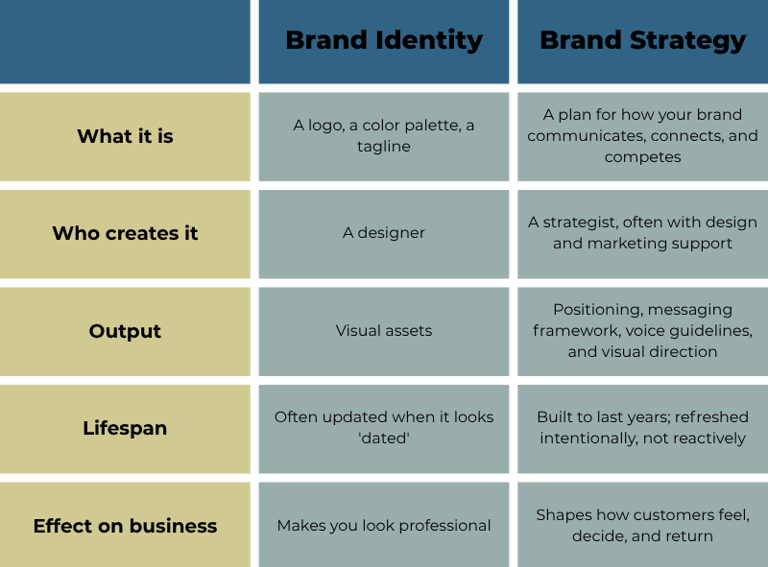
Brand Strategy vs. Brand Identity: They Are Not the Same Thing
Brand identity is what your business looks and sounds like: your logo, your color palette, your fonts, and your tone of voice. These are the visible, tangible elements of your brand.
Brand strategy is the thinking behind all of that. It answers the questions that should come before any design decisions:
Who are we building this brand for?
What problem do we solve better than anyone else?
How do we want customers to feel when they interact with us?
What do we stand for, and what do we not stand for?
How do we stay consistent as we grow across platforms and channels?
Brand identity without brand strategy is decoration. It may look polished, but it lacks direction. A strategy gives your identity purpose.
What Brand Strategy Actually Does for Your Business
Brand strategy is not abstract. Its effects show up in concrete, measurable ways.
1. It Builds Recognition That Compounds Over Time
Customers need repeated, consistent exposure to a brand before they trust it enough to buy. That consistency only happens when there is a strategy behind it: shared guidelines that ensure your Instagram post, your website, and your email newsletter all feel like they come from the same business.
2. It Gives You a Positioning That Attracts the Right Clients
Without a clear positioning strategy, your brand appeals to everyone in theory and no one in practice. Brand strategy forces you to define who your ideal client is, what they care about, and why your offer is the right fit for them specifically. The result is marketing that attracts qualified leads instead of generating noise.
Positioning is not about being all things to all people. It is about being the obvious choice for the right people.
Real-World Example
Mailchimp (2018) made a significant shift when it repositioned itself from 'email marketing tool for small businesses' to 'all-in-one marketing platform.' The repositioning was not just a tagline change. It reflected a strategic decision about who they were building for and where the business was headed. Within two years, non-email marketing products accounted for a growing share of new customer acquisition.
Source: Mailchimp company blog, 2018-2020; reported in Marketing Week and Harvard Business Review.
3. It Makes Every Marketing Decision Easier
One of the most underappreciated benefits of a brand strategy is that it functions as a filter for decisions. Should you run this ad? Does this campaign fit the brand? Should you post this type of content on LinkedIn? A clearly documented strategy answers these questions before you have to debate them each time.
Without a strategy, every marketing decision becomes a fresh negotiation. With one, you have a reference point.
4. It Creates Emotional Consistency, Not Just Visual Consistency
Brand identity keeps things visually consistent. Brand strategy keeps things emotionally consistent. It defines how you want customers to feel at every touchpoint: welcomed, confident, informed, or inspired. This emotional thread is what turns one-time buyers into repeat customers and repeat customers into advocates.
5. It Shapes Your Brand Voice Across Every Channel
Your brand voice is how your business sounds in writing, in conversation, and in content. It is one of the most powerful differentiators available to a small business, and it is almost entirely controlled by strategy, not design.
In 2026, this matters more than ever. AI-generated content is flooding search results and social feeds. Much of it sounds the same: helpful, informative, and interchangeable. A brand with a clearly defined voice stands out immediately because it sounds like a real business with a real point of view.
Brand strategy defines that voice. It decides whether you sound conversational or authoritative, whether you use humor or stay professional, and whether you speak to clients as peers or as a trusted expert. Without that definition, your content defaults to generic.
Why This Matters in 2026
As AI tools make it easier to produce content at scale, brand voice has become one of the few things AI cannot fully replicate. It requires knowing your audience deeply, having a clear point of view, and making deliberate choices about how to communicate. These are strategic decisions, not automated ones.
Businesses with a defined brand voice strategy are better positioned to use AI tools without sounding like every other AI-assisted business.
Signs You Are Operating Without a Brand Strategy
Most small businesses do not realize they are missing a brand strategy. They have a logo, a website, and active social media accounts. But they may recognize some of these patterns:
Inconsistent visuals across platforms. Your website looks different from your Instagram, which looks different from your printed materials. There is no unifying visual logic.
Difficulty explaining what makes you different. When someone asks why they should choose you over a competitor, you lead with price or availability rather than a clear value proposition.
Content that feels scattered. Your posts, emails, and blog articles cover many topics but do not build toward a coherent message about who you are and what you do.
Reactive rebranding. You have redesigned your logo or changed your colors because they felt outdated, not because of a deliberate strategic decision.
Attracting the wrong clients. You are getting inquiries, but they are often from clients who are not the right fit, either in budget, project type, or expectations.
Refresh vs. Rebrand: Strategy Tells You Which One You Need
A brand refresh updates the surface: modernized colors, refined typography, a slightly updated logo. A rebrand rethinks the foundation: new positioning, new audience targeting, sometimes a new name.
Without a brand strategy, businesses guess. They rebrand when a refresh would do, or they refresh when the real problem is deeper than aesthetics. A strategy gives you the clarity to make the right call.
Ask: Has our target audience changed? Have we shifted our core service offering? Do we need to compete in a different space? If yes to any of these, you are likely looking at a rebrand. If the fundamentals are sound but the visuals are dated, a refresh is the smarter move.
What a Brand Strategy Document Includes
A brand strategy is not just a feeling or a philosophy. It is a working document that the team can reference, apply, and use to brief designers, writers, and marketing partners.
A well-built brand strategy typically includes:
Brand positioning statement. A clear, internal-facing definition of who you serve, what you offer, and how you are different.
Target audience profiles. Descriptions of the specific types of people or businesses you are trying to reach, including their goals, concerns, and decision-making process.
Core brand values. Three to five principles that guide how you work and communicate.
Brand personality. The human traits that describe how your brand would act if it were a person (think: knowledgeable and approachable, not corporate and distant).
Brand voice guidelines. Specific guidance on tone, language style, and communication preferences, with examples of what sounds on-brand and what does not.
Messaging framework. Key messages for each audience segment, including how to talk about your services, your results, and your point of view.
Visual identity direction. The strategic reasoning behind logo, color, and typography choices, so designers understand why, not just what.
This document becomes the foundation for every piece of content, every campaign, and every client conversation. It does not restrict creativity. It focuses it.
How Brand Strategy and Brand Identity Work Together
Brand identity is what your customers see. Brand strategy is what makes what they see intentional.
Think of it this way: brand identity is what your business looks like, and brand image is how customers actually perceive it. The gap between the two is usually a strategy problem. You design one thing, customers perceive another. A strong strategy closes that gap by ensuring that every touchpoint is built on the same foundation.
Brand Identity vs. Brand Image
Brand identity is what you design and control: your logo, your colors, your website copy, your tone of voice.
Brand image is what customers actually think and feel about your business, shaped by every interaction they have had with you.
Brand strategy is the plan for making these two things as aligned as possible. Without it, the gap between identity and image grows over time.
When Should a Small Business Invest in Brand Strategy?
Brand strategy is not only for large companies with big marketing budgets. In fact, small businesses often benefit more from it because they are competing in environments where reputation, word-of-mouth, and perceived credibility matter enormously.
Consider building or revisiting your brand strategy when:
You are launching a new business and need to establish your positioning before building your website or marketing materials.
You are entering a new market or targeting a different client segment than before.
Your marketing feels unfocused and you are not sure what to say or where to say it.
You are planning a website redesign, rebrand, or refresh and want to do it right.
You are bringing on new team members or contractors and need shared guidelines for how to communicate.
Your business has grown significantly since you last thought about your brand, and the old positioning no longer fits.
You do not need to rebuild from scratch every time. Brand strategy should be revisited, not rewritten, as your business evolves.
Not Sure Where Your Brand Strategy Stands?
At Impasto Creative Solutions, we help small businesses build brand strategies that do real work: attracting the right clients, guiding consistent communication, and creating the foundation for sustainable growth.
Visit impastocreatives.com to learn more about our branding and strategy services.
Sources
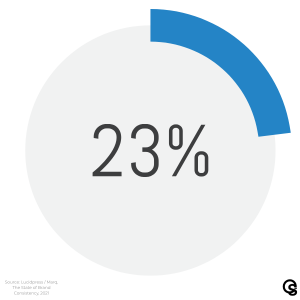
1. Lucidpress / Marq. (2021). The State of Brand Consistency. Retrieved from https://www.marq.com/brand-consistency-report. This report surveyed 400+ marketing and sales professionals and found that consistent brand presentation across all platforms can increase revenue by an average of 23%.
2. Edelman. (2023). Edelman Trust Barometer: Trust in Business. Chicago: Edelman. Retrieved from https://www.edelman.com/trust/2023/trust-barometer. Key findings on the role of shared values in building consumer-brand relationships.
3. Harvard Business Review. (2000). The Brand Report Card. Keller, K. L. Retrieved from https://hbr.org/2000/01/the-brand-report-card. A foundational framework for evaluating brand strength, including the role of emotional consistency.
4. Mailchimp. (2018). Mailchimp Evolves Beyond Email to Become an All-in-One Marketing Platform. Mailchimp Blog. Retrieved from https://mailchimp.com/newsroom/mailchimp-all-in-one-marketing/. Source for the brand repositioning case example.
5. Aaker, D. A. (1991). Managing Brand Equity: Capitalizing on the Value of a Brand Name. New York: Free Press. Foundational text on brand identity, brand image, and brand equity for small and large businesses.
6. Wheeler, A. (2018). Designing Brand Identity: An Essential Guide for the Whole Branding Team (5th ed.). Hoboken: John Wiley & Sons. Reference for the components of a brand strategy document and the relationship between brand identity and brand image.
7. Nielsen. (2023). Annual Marketing Report: The Era of Adaptable Marketing. Retrieved from https://www.nielsen.com/insights/2023/annual-marketing-report/. Cited for brand consistency and audience trust data in multi-channel marketing environments.
Average revenue increase for businesses that present their brand consistently across all channels
Source: Lucidpress / Marq, The State of Brand Consistency, 2021
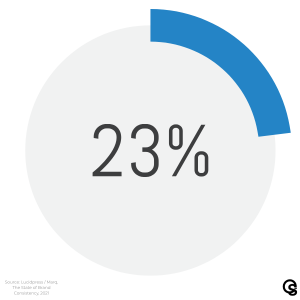
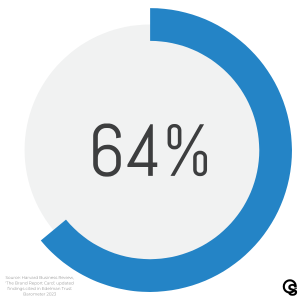
of consumers say that shared values are the primary reason they have a relationship with a brand
Source: Harvard Business Review, 'The Brand Report Card,' updated findings cited in Edelman Trust Barometer 2023
IMPASTO CREATIVE SOLUTIONS
We make your brand visible, searchable, and impossible to ignore. Let’s get started today.