Social Media as a Search Engine: What Businesses Need to Know
Most businesses use social media to broadcast. Their potential clients are using it to search. Those two things are incompatible, and the gap is costing real inquiries every week.
The shift is already at scale
67% of US social media users have used social search in their purchase journey. Discovery on social platforms is no longer a niche behavior. (IZEA / Hootsuite, 2025-2026)
60%+ of product discovery now happens on social platforms, collectively surpassing Google Search. TikTok, Instagram, and YouTube are driving this shift. (Sprout Social, 2026)
49% of US consumers now use TikTok as a search tool, up from 41% in 2024. Among Gen Z, 64% use TikTok as their primary search platform. (Adobe, 2026)
52% of social media users prefer social search over AI chatbots when looking for user-generated content and personal experiences, specifically because they trust it more. (Sprout Social Q3 2025)
Google confirmed in 2022 that over 40% of Gen Z already preferred Instagram or TikTok over Google for search. Three years later, that share is larger and no longer limited to younger audiences. (Google / SEO Sherpa, 2026)
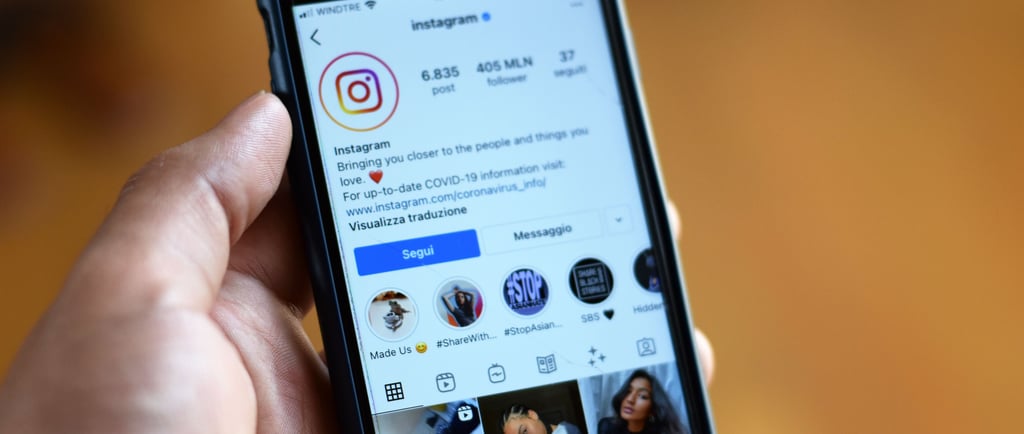
Someone in your market just typed 'brand designer who works with service businesses' into Instagram's search bar. They scrolled through the results, tapped on a profile that had a clear bio, found a reel that answered exactly the question they had, and sent a message.
Your business might offer exactly what they needed. But if your profile does not say it in the right language, your captions do not use the terms they searched for, and your content is not structured for discovery, you did not show up. You were not part of the consideration.
This is happening across Instagram, TikTok, LinkedIn, YouTube, and Pinterest every single day, and the scale of it is now large enough to call it a structural shift. Businesses that have adapted to this are seeing their profiles surface for new potential clients without paying for the reach. Businesses still treating social media like a noticeboard are posting into a channel that has moved on without them.
How Social Search Actually Works
When someone searches on Instagram, TikTok, or LinkedIn, the platform's algorithm does not show results in the same way Google does. There are no meta descriptions or title tags. But there are signals, and they are readable if you know what to optimize.
Every platform uses your profile name, bio, and category labels to understand who you are and what you offer. Your captions tell it what a specific post is about. Hashtags work as category signals. On-screen text in videos gets read. And the saves, shares, and comments your content generates tell the algorithm whether the content is genuinely useful to the people finding it, or just being ignored.
Since mid-2025, public posts from professional Instagram accounts are also indexed by Google by default. That means an optimized Instagram caption can now appear in a standard Google search result. Your social media presence and your search presence are no longer separate things.
What separates the businesses winning social search from those invisible in it comes down to content and profile intentionality, not volume or ad spend. A clear profile. Captions written in the language clients search rather than the language the business uses internally. Content that earns saves. Those three things compound in visibility over time in a way that broadcasting never does.
Where Service Businesses Should Focus
Social search behavior varies by platform. The strategy for a consultancy on LinkedIn looks different from a design studio on Instagram or a coaching business on TikTok. Here is how the three platforms most relevant to service businesses are functioning as search engines in 2026.
TikTok
The fastest-growing search engine for how-to, reviews, and service discovery
Who is searching here: Broad and growing. No longer just Gen Z. TikTok's user base is ageing up, and B2B and service business searches have increased significantly. 92% of users take an action after watching content, making TikTok one of the highest-action platforms available.
What they are searching for: Product and service reviews from real users, how-to explanations, comparisons between providers, and location-based recommendations. TikTok processes more fashion searches than Google, but the same search behavior applies to digital services, consulting, and professional services in certain markets.
How to optimize for discovery: Keywords in captions and on-screen text. A profile bio that immediately communicates what you offer. Consistent posting around a defined set of topics, which teaches the algorithm your niche. Content that front-loads the value in the first two seconds, because attention thresholds are short and saves are a key discovery signal.
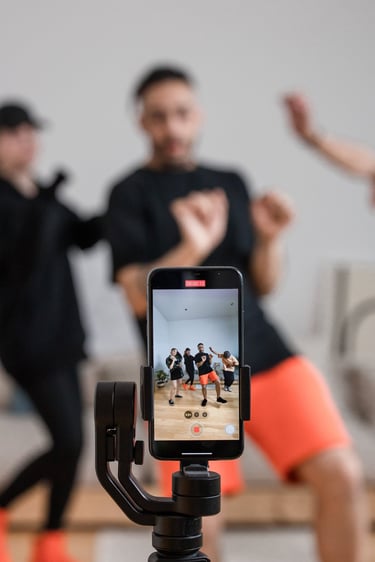
Discovery engine for visual services, local businesses, and personal brands
Who is searching here: A wide range of demographics, with strongest search activity among 25-to-44-year-olds. Searches include service providers, product recommendations, location-based queries, and how-to content. Over a quarter of social users now use Instagram specifically for product and service discovery.
What they are searching for: Service providers in their city, how-to content related to a problem they have, recommendations from people with similar challenges, before-and-after results, and business profiles they have heard of but want to verify.
How to optimize for discovery: Keyword-rich bio that states clearly who you serve and what you do. Keywords in the first sentence of every caption. On-screen text in Reels that mirrors what your audience searches. Location tags for local visibility. Content that generates saves, which is the algorithm's strongest signal of genuine value.
The professional search engine for B2B services, consultants, and agencies
Who is searching here: Decision-makers, founders, managers, and professionals actively looking for service providers, insights, and trusted expertise. LinkedIn's 2026 data shows text posts significantly outperform all other content types for reach and discovery among professional accounts.
What they are searching for: Agencies, consultants, and specialists by service type and industry. Thought leadership content that demonstrates expertise in a specific area. Company profiles and personal profiles of practitioners in a field.
How to optimize for discovery: Profile headline and summary written with the search terms a potential client would use, not just a job title. Consistent posting of insight-driven content that addresses specific client problems. Keywords embedded naturally in post copy. Company page optimization with accurate service categories and regular content output.
Saves: The Signal That Tells the Algorithm Your Content Has Real Value
On every platform, saves carry more algorithmic weight than likes or comments. A save means someone found your content valuable enough to return to. That signal tells the algorithm that the content is genuinely useful and worth recommending to more people searching for similar topics. Businesses that consistently create content structured around a specific problem or how-to and explicitly prompt their audience to save it for later build the algorithmic credibility that drives discovery for weeks and months after the original post. One well-optimized saved post can generate new profile visits from search long after it was published.
Example: A reel answering 'how do I know if my social media is actually working' with a clear save prompt at the end will generate saves and algorithmic distribution that benefits the account for weeks, not just on the day of posting.
The Four Discovery Signals You Need to Get Right
Across all three platforms, the algorithm uses the same four elements to determine whether to show your content to someone searching for what you do. Get these right and they reinforce each other. Leave any one of them weak and it limits what the others can achieve.
Your Profile: The First Search Result Anyone Sees
When someone discovers your content through search, the first thing they do is tap your profile. Your profile is the landing page of your social presence, and it needs to do in three seconds what your homepage does in eight. Your bio should state plainly who you are, who you serve, and what you do. It should include the keywords a client would use to search for your service. Not your mission statement. Not your awards. The exact terms your ideal client types when they are looking for someone like you.
Example: A brand designer who serves founders and small businesses should have 'brand design for small businesses and founders' in their bio, not 'visual storyteller and creative director.' Both might describe the same person, but only one of them is what the client searches.
Captions: Your Most Important Discovery Metadata
In 2026, the caption is the single most important piece of optimization you control on a social post. The algorithm reads captions to understand the topic of the content. The most important keywords belong in the first sentence, because the algorithm weights the opening more heavily. Write captions for the human reading them first, but make sure the human language you use matches how your audience searches, not how you describe your own work. Captions that lead with the client problem, use the terms they would type into search, and end with a save prompt consistently outperform captions written as announcements or personal updates.
Example: Instead of 'Loved working on this project,' write: 'If your website is getting traffic but no inquiries, here is what the copy is doing wrong.' The second version matches a search query. The first is a broadcast.
Keywords: Writing for How Your Clients Search, Not How You Talk
The gap between how businesses describe their own services and how clients search for them is one of the most common reasons businesses do not show up in social search. A marketing agency might describe itself as 'a strategic growth partner.' Their potential client searches 'social media manager for coaching businesses.' Both are talking about the same service. Only one phrase will surface in search. Identify the exact language your ideal clients use when they describe their own problem, then use that language consistently across your bio, captions, and on-screen text. This is not keyword stuffing. It is writing in the reader's language rather than your own.
Example: A business coach whose clients search 'how to get clients online as a coach' should use that phrase or close variations in their content regularly, not just 'business development strategies for entrepreneurs.'
Both posts describe the same event. The second one uses language a potential client searching 'brand workshop for small business' or 'brand positioning tips' would find. It ends with a save prompt that builds algorithmic credibility. It demonstrates expertise instead of just announcing presence. The first post communicates to existing followers. The second one attracts new ones through search.








The Poster Mindset vs the Search-Optimized Mindset
Most businesses currently use social media as a broadcast channel. They create content, publish it, and measure success by reach and engagement in the days immediately after posting. That approach made sense when social media was primarily a feed-based platform. It is less useful now that a significant share of discovery happens through search.
Making that shift does not require posting less or overhauling your content format. Adding a layer of search intentionality to what you already do is what changes the outcome. The same post that generates immediate engagement from existing followers can also surface in search results weeks later, if the caption is written with the right language and the content earns saves.
Not optimized for discovery
Optimized for social search
We had an incredible time at the brand workshop last week. The energy in the room was everything. Grateful for our amazing clients!
Running a brand workshop for a local service business this week. Here are three things we help every client clarify before we touch any visuals: their one-line positioning, who they are not trying to attract, and what their best client says about them. Save this if you are working on your own brand.
Why Getting This Right Now Matters More Than Waiting
Social search visibility is still being built, not bought. Paid advertising on social platforms is accessible to any business with a budget. Organic search visibility through optimized content takes time, consistency, and strategy, which means the businesses that build it now will be harder to displace later.
Instagram's own data shows that initial results from consistently applied SEO practices appear within three to four weeks. Full momentum, where the algorithm has learned your niche and your content surfaces regularly in search results for relevant queries, typically takes two to three months of consistent application. That is not a long runway. But every month spent posting without that optimization is a month of missed discovery.
There is also a competitive window that will not stay open indefinitely. Most service businesses in any given category are still operating in broadcast mode. The gap between them and a business that has built a search-optimized social presence is widening every month. Building that presence now while most of your competitors have not made the shift is a meaningful advantage. Once they catch up, the work is harder.
The question worth asking right now
Pull up your Instagram or LinkedIn profile and read your bio as if you have never heard of your business. Does it contain the specific words your ideal client would type into a search bar? If not, that is the first thing to change. The rest of the optimization builds from there.
Why This Requires Strategy, Not Just Better Captions
Updating your bio and writing better captions is a reasonable first step. Consistent, compounding results from social search require something more systematic: a content strategy built around the specific search terms your audience uses, the platforms where they are looking, and the content formats that build algorithmic credibility over time.
Most businesses stall at this point. They understand the principle and make a few changes. The captions get a little longer. Some keywords find their way into the bio. But without a strategy behind the content, the improvements are inconsistent and the results are hard to attribute. You need to know which keywords your audience searches on each specific platform, which formats drive discovery in your category, and how to build a library of save-worthy content that grows in reach rather than living for a single news feed cycle.
That combination of search thinking and social content expertise is exactly what ICS brings to a content strategy engagement. We do not write posts that look good. We build content systems designed to be found.
Your potential clients are searching for you on social media right now. The only question is whether your presence is built to be found.
We have built social media content strategies for service businesses from the ground up, connecting their content directly to how their ideal clients search across Instagram, LinkedIn, and TikTok. We have optimized profiles that were generating zero search traffic and built content plans around search-intent terms that made the right clients find the right business at the right moment.
You do not need to figure out the keyword research, caption structure, and platform-specific strategy on your own. You need a team that has already done it for businesses in your category and can build a system that compounds in visibility over time.
Do not wait to test whether social search will work for your business. The data already shows it is working across every industry and service category. The only variable is whether your presence is built to take advantage of it.
Book a content strategy call at impastocreatives.com. Bring your current social profiles. We will tell you exactly what is limiting your discoverability and what it takes to get in front of the clients already searching for what you do.
Sources
1. Hootsuite. (January 2026). The 18 Social Media Trends to Shape Your 2026 Strategy. By 2025, about two-thirds of US consumers had used social search. Multi-modal social search including visual and voice search is new in 2026. blog.hootsuite.com/social-media-trends/
2. Sprout Social. (2026). 120+ Social Media Marketing Statistics for 2026. Social platforms (TikTok, Instagram, YouTube) collectively account for 60%+ of product discovery, surpassing Google. 52% of Gen Z are more likely to trust brand information found on social media than information from Google or AI chatbots. sproutsocial.com/insights/social-media-statistics/
3. Sprout Social. (May 2026). Social Media Demographics to Inform Your 2026 Strategy. Q3 2025 Pulse Survey: 52% of social media users prefer social search over AI chatbots for finding personal experiences and UGC. sproutsocial.com/insights/new-social-media-demographics/
4. Adobe / SEO Sherpa. (2026). TikTok Search Usage and Social Search Statistics. 49% of US consumers use TikTok as a search tool, up from 41% in 2024. 64% of Gen Z use TikTok as their primary search platform. Google confirmed 40%+ of Gen Z prefer Instagram or TikTok over Google for search. seosherpa.com/tiktok-search-engine/
5. IZEA / eMarketer. (2025-2026). Social Search Trends. 67% of US social media users are at least somewhat likely to engage in social search at some point in their purchase journey. emarketer.com/content/social-search-trends-2024
6. Lamplight Creatives. (January 2026). Why Captions Matter More Than Hashtags on Instagram in 2026. Since mid-2025, public posts from professional Instagram accounts are indexed by Google by default. Instagram SEO prioritizes keywords in captions over hashtag discovery alone. lamplightcreatives.com/captions-vs-hashtags-instagram-2026/
7. Later. (May 2026). Instagram SEO: How to Optimize for Discoverability in 2026. Initial results from Instagram SEO practices appear within 3 to 4 weeks. Full algorithmic momentum typically takes 2 to 3 months of consistent application. later.com/blog/instagram-seo/
8. Network Solutions. (January 2026). Instagram SEO: Get More Reach for Your Business in 2026. Keywords in bio, captions, alt text, and on-screen text help Instagram and Google understand what content is about. A single optimized post can support discovery on and off the platform. networksolutions.com/blog/instagram-seo/
9. Sprout Social. (February 2026). Instagram SEO Strategies for In-App and Search Engine Discoverability. Over a quarter of social users now use Instagram specifically for product discovery. Social SEO improves engagement, conversions, and discoverability simultaneously. sproutsocial.com/insights/instagram-seo/
10. HubSpot. (2026). Social Media Trends Report. Social platforms are becoming the primary search engine for younger generations. Social search is a full-funnel phenomenon affecting discovery, consideration, and conversion. offers.hubspot.com/social-media-trends-report
11. Impasto Creative Solutions. (2026). Impasto Blog Calendar 2026-2027. BLG-014: Social Media as a Search Engine: What Businesses Need to Know. Internal document.
12. Impasto Creative Solutions. (2026). Keyword Cluster Research: 26 Clusters for Digital Marketing for Small Businesses. Internal document.
IMPASTO CREATIVE SOLUTIONS
We make your brand visible, searchable, and impossible to ignore. Let’s get started today.