How to Write Website Copy That Turns Visits Into Inquiries
Most service business websites explain the business. The ones that convert explain the client. Here is the difference.
CONTENT CREATIONSEOLEAD GENERATIONHOW-TO
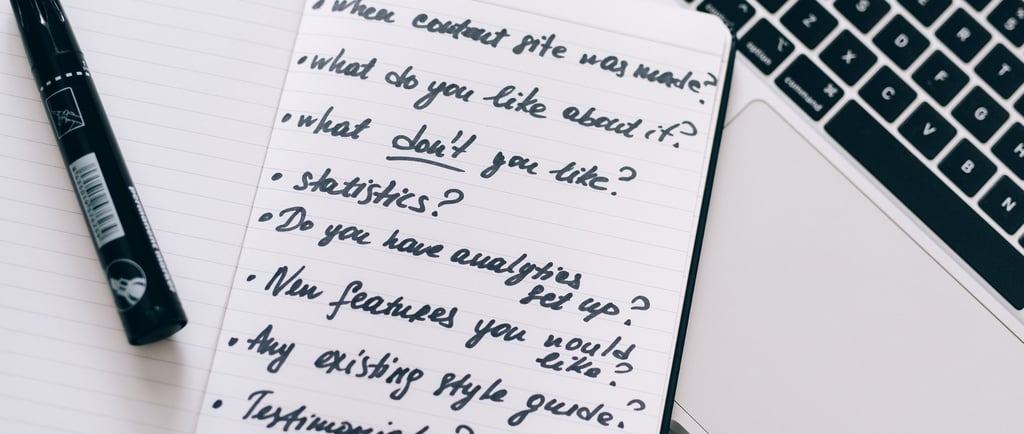
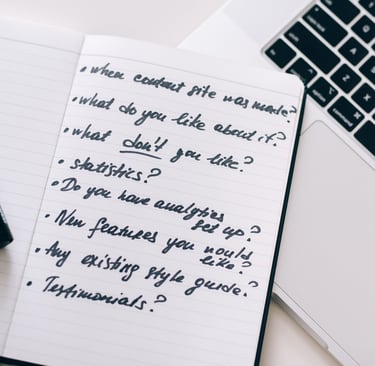
Here is a question worth sitting with: if a stranger landed on your website right now, how long would it take them to understand exactly what you do, who you do it for, and what happens if they reach out?
For most service businesses, the honest answer is: too long. Or possibly: they would leave before finding out.
The average user spends about eight seconds deciding whether to stay on a page before moving on. In those eight seconds, they are not reading your credentials or your company history. They are scanning for a signal that this business understands their specific problem and can actually solve it. If that signal is not there in the first scroll, they are gone.
Most service business owners who are not getting inquiries assume the problem is traffic: not enough people finding the site. Or they assume it is design: the site does not look credible. Both are worth checking. But the more common culprit, the one that sits quietly underneath both of those, is copy that was written for the business rather than for the client.
That problem has a fix. The four-part framework below gives you the structure that most converting service websites follow, with before-and-after examples at each stage so you can see what the shift actually looks like in practice.
The numbers that put this in perspective
97 out of 100 visitors to the average website leave without taking any action. The global average conversion rate is 2.35% across all industries in 2026. (Contentsquare Digital Experience Benchmark, 2026)
8 seconds is the average user's attention span before they decide to stay or leave. That window is where your copy either earns the conversation or loses it. (DevriX, 2026)
88% of users are unlikely to return to a website after a bad first experience. Copy that confuses or fails to connect is that bad experience. (Digital Silk, 2026)
Top performers convert at 5x the average rate. The gap is not about more traffic or a better-looking site. It is about how clearly the copy communicates who it is for and what to do next. (GreetNow, 2026)
The Core Problem: Your Website Is Talking About You
Here is the thing almost no one says out loud: most service business websites are written from the inside out. They describe the business from the business owner's perspective, not from the client's.
Think about what a typical service business homepage actually shows. The years the company has been operating. A list of services with professional-sounding names. A paragraph about the team's passion for excellence. Maybe a contact button at the very bottom.
Nobody who just found you for the first time is looking for any of that. They want to know: does this business understand the problem I have right now, and can they actually help? That question is almost never answered in the copy, because the copy is about the business, not the client.
Business owners almost always write about their business from the inside out. It makes sense: you know your services, your history, your credentials. So you write about those things. The gap is that your potential clients do not arrive with that same context. They are filtering for one thing: is this relevant to me, right now?
The golden rule of website copy
It is not about you. It is about them. Your visitors are not interested in your mission statement or how long you have been in business. They care about one thing: whether working with you is going to make their situation better. Every sentence on your website should be written with that filter in mind.
The Four-Part Messaging Framework
Good website copy is not about beautiful writing. It is about giving visitors the right information in the right order, so they feel understood and know what to do next. The four elements below are what that looks like in practice.
Lead with the Problem
The first thing your copy needs to do is make the reader feel seen. Before you explain your service, name the situation they are in. What are they frustrated by? What is the thing that keeps not working? What did they type into Google before landing here? When someone reads their own problem described clearly on your page, they stop scanning and start reading.
Before (business-focused): We are a full-service digital marketing agency helping businesses succeed online.
After (client-focused): If your website is getting visitors but no inquiries, the problem is not your traffic. It is your copy.
Position Your Service as the Solution
Once you have named the problem, your service becomes the answer to it. Not a list of features. Not a description of your process. One clear statement of what you do and why it resolves the specific problem you just described. The transition from problem to solution is where most business copy falls apart, because businesses jump straight to what they offer without connecting it to what the client actually needs.
Before (business-focused): Our services include branding, website design, SEO, social media management, and paid advertising.
After (client-focused): We help service businesses build the online presence that brings in the right clients consistently, without guessing at which channel to invest in first.
Back It Up with Proof
People do not take action on promises. They take action on evidence. After you have described the problem and positioned your service as the solution, you need something that makes it believable. This can be testimonials, results, client names, case study snapshots, or even specific numbers. Vague proof does not work. A general five-star review tells a visitor very little. A testimonial that describes a specific situation and a specific outcome tells them everything.
Before (business-focused): Our clients love working with us. We have helped many businesses grow online.
After (client-focused): After three months of working with our team, a Manila-based consultancy went from zero inquiries from their website to an average of six new client conversations per month.
Make the CTA Specific and Expectation-Setting
The call to action is the most underestimated element of website copy. Most service business websites use a generic button: 'Contact us' or 'Get in touch.' These ask the visitor to act without telling them what happens next. A specific CTA removes the uncertainty that stops people from clicking. It sets a clear expectation about what the first step looks like, which makes it far easier to say yes.
Before (business-focused): Contact us to learn more.
After (client-focused): Book a free 30-minute discovery call. We will review your current website and tell you honestly what is working and what needs to change.
The Five Mistakes That Kill Your Copy Before Anyone Reads It
The framework works when it is applied. The problem is that most businesses understand the principle and then immediately slip back into old habits when they sit down to write. These are the patterns we see most often when we review service business websites.





Writing for yourself, not your visitor
This is the root of most copy problems. When you write your own website, you naturally default to describing what you know: your services, your process, your credentials. But your visitor does not have that context yet. They arrived with a problem and a question: can this business help me? Every sentence should be written as an answer to that question, not as a description of the business from the inside.
Using jargon your clients do not speak
Every industry has language that insiders use comfortably. The problem is that your clients often do not use that language when they are searching for help. A home repair business that optimises for the term 'fire restoration' instead of 'fire cleanup' is invisible to the very people who need them, because clients type what they experience, not the technical name. Write your copy in the language your clients use, not the language your industry uses.
Burying the CTA or using a vague one
In a 2026 study of 2,000 tested service pages, 'Contact us' lost to 'Get a quote' on every single page tested. 'Specificity converts; vagueness decorates.' Your CTA is not just a button. It is the moment where a visitor decides whether to trust you with their next step. If the button is vague or hidden at the bottom of the page, most people will not find it. If it is specific and explains what happens after the click, far more people will use it.
Treating every page the same
Your homepage, your service pages, your about page, and your contact page each have a different visitor and a different job to do. The homepage converts a first impression into interest. A service page converts interest into intent. The about page converts curiosity into trust. The contact page converts intent into action. Writing the same type of copy across all of them misses that each one is a different conversation with a different person at a different stage of their decision.
Overloading the page with everything
Cluttered pages cut conversions by up to 95%, according to 2026 website performance data. The instinct to include every credential, every service, every accolade on the same page is understandable but costly. More information does not build more confidence. It creates more friction. The best-converting pages have a clear focus, a clear offer, and a clear next step. Everything else is a distraction from the action you want the visitor to take.
Why This Is Harder Than It Sounds
The framework above is not complicated. Most business owners read it and immediately start thinking about how their current copy measures up. Some make edits the same day. And then they hit the real problem.
Writing client-focused copy requires genuine distance from your own business, and that is almost impossible to achieve when you have built it. The longer you have been at it, the more context you carry, and the harder it becomes to strip back to what a first-time visitor actually needs to hear. You are too embedded in the process, the qualifications, the history of how the thing was built. What feels like important context to you is usually noise to someone who found you thirty seconds ago.
It also requires knowing what clients are actually thinking when they arrive, not what you assume they are thinking. That comes from research: the language in their reviews, the objections that stop them from reaching out, the specific phrases they use when they search. Without that, copy defaults to generic, because generic is what you get when you write without that input.
And then there is consistency, which is where even good copy loses its grip. A strong homepage does not close the loop if the service pages revert to feature lists and the contact page gives no indication of what happens after the form is submitted. Every point of friction in that journey costs an inquiry. Inconsistency at any one of those points reintroduces the doubt the homepage worked to remove.
Professional copywriters charge a significant fee for a few hundred words of website copy, and there is a reason for that. What you are paying for is not the writing itself. It is the research, the positioning work, the understanding of persuasion psychology, and the ability to see your business from the outside in a way you simply cannot do for yourself.
A quick self-check for your current copy
Read your homepage as if you have never heard of your business. Then ask:
1. Within five seconds, is it clear what problem this business solves?
2. Is the copy written in language your clients would actually use, or in language your industry uses?
3. Is there a specific call to action that tells the visitor exactly what happens when they click?
4. Is there at least one piece of specific proof, not a vague claim, that makes your service credible?
If you answered 'not really' to more than one of those, your copy is costing you inquiries every single day.
Right now, someone is landing on your website and leaving without reaching out. Here is how to change that.
At Impasto Creative Solutions, website copy is part of every site we build and every site we audit. Before we write a single word, we research how your ideal clients describe their own problems, what language they use when they search, and what your competitors are saying so your messaging can be genuinely distinct.
If you already have a website and it is not converting the way it should, we can review the copy across your key pages and tell you specifically what needs to change and why. If you are building a new site, we write copy that is built into the structure rather than bolted on afterward, which is how it stays consistent from page to page.
Whatever the starting point, the conversation begins the same way: we look at what your website is currently communicating, compare that to what your ideal client actually needs to hear, and tell you specifically what needs to change.
Request website copy support at impastocreatives.com. Tell us what your website is supposed to be doing and what it is actually doing. We will take it from there.
Sources:
1. Contentsquare. (2026). Digital Experience Benchmark Report. Global average website conversion rate is 2.35% in 2026, meaning 97 out of 100 visitors leave without taking action. Top performers convert at 5x the average rate. contentsquare.com
2. DevriX. (March 2026). User Attention Span: The Biggest Challenge for Marketers. The average user attention span is 8 seconds in 2026, down from 12 seconds in 2000. devrix.com/tutorial/user-attention-span/
3. Digital Silk. (January 2026). 50+ Website Statistics To Know In 2026. 88% of users are unlikely to return to a website after a bad first visit. Cluttered pages reduce conversion rates by up to 95%. digitalsilk.com/digital-trends/top-website-statistics/
4. GreetNow. (2026). Website Conversion Rate Statistics 2026: 75+ Benchmarks. Top-performing websites convert at 5x the industry average. The gap is not about traffic volume but about copy clarity and relevance. greetnow.com/blog/website-conversion-rate-statistics
5. DigitalApplied. (April 2026). Landing Page Conversion: 2,000 Pages Tested in 2026. On B2B services pages, 'Contact us' consistently lost to 'Get a quote' in CTA testing. Specificity in proof and calls to action was the single strongest conversion driver. digitalapplied.com/blog/landing-page-conversion-study-2000-pages-tested-2026
6. Disruptive Advertising. (2023). 7 Website Copywriting Mistakes Keeping You From Getting Clients. Professional copywriters charge a significant fee for a reason: the research, positioning, and persuasion work behind the words is the actual product. disruptiveadvertising.com
7. btlcopy (Behind the Lines Copy). (2026). TOC #216: Clients Straight Up Don't Care About This. One of the biggest mistakes business owners make when writing their own website copy is not considering what their audience actually needs to know to feel confident enough to take action. btlcopy.substack.com
8. Reboot Online. (April 2026). Website Statistics 2026. With an average attention span of eight seconds, websites must communicate value and relevance immediately. rebootonline.com/website-statistics/
9. Impasto Creative Solutions. (2026). Impasto Blog Calendar 2026-2027. BLG-012: How to Write Website Copy That Turns Visits Into Inquiries. Internal document.
10. Impasto Creative Solutions. (2026). Keyword Cluster Research: 26 Clusters for Digital Marketing for Small Businesses. Internal document.
11. Impasto Creative Solutions. (2026). ICS Content Strategy Reference Guide. Internal document.
IMPASTO CREATIVE SOLUTIONS
We make your brand visible, searchable, and impossible to ignore. Let’s get started today.