How to Know Whether Your Business Needs Branding, SEO, Social Media, or Ads First
A quick decision guide for business owners who are ready to invest in marketing but are not sure where to begin.
SOCIAL MEDIAPAID ADSWEBSITE DEVELOPMENTCONTENT CREATIONSEOBRAND STRATEGYDECISION GUIDE


At some point, almost every business owner faces the same pile of options: branding, SEO, social media, paid ads. Everyone seems to have a strong opinion about which one to prioritise. The problem is they are all talking about different stages of the same problem, and their recommendation usually reflects their own expertise rather than your situation.
Investing in the wrong channel first is not just a budget issue. It is a time issue. You spend months learning that the thing you invested in is not what you actually needed yet, and by then the other channels that could have compounded have not started.
This guide cuts through the general advice and focuses on one question: given where your business is right now, where should the first dollar go? Each section covers what the channel actually does, the clearest signals that your business needs it, and what results you can realistically expect once it is in motion.
A quick note before you read on
This is not a ranking. Branding, SEO, social media, and paid ads are not listed in order of importance because their importance depends entirely on your situation. What this guide does is help you identify which situation you are in. Read the signals for each channel and see which ones you recognise in your own business.
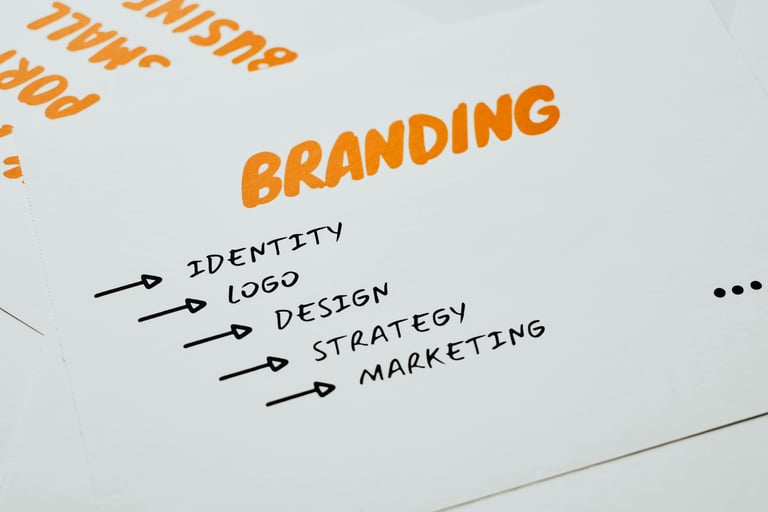
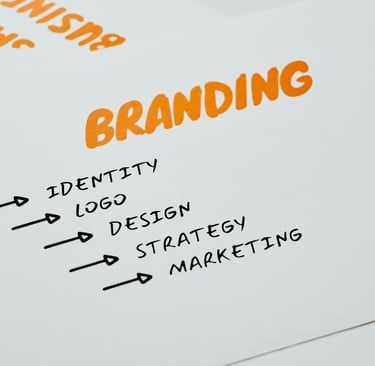
Branding: The Foundation Everything Else Builds On
Branding is the most underestimated marketing investment a small business can make. It is also the one most commonly deferred. That is partly because it does not feel urgent. A logo exists. A name exists. There is something on the website. It is easy to convince yourself the brand is fine and move straight to things that feel more measurable.
But here is what happens when you skip it: everything else you invest in has to work against the grain of a brand that is not doing its job. Your SEO content gets found and immediately evaluated against what your brand communicates. Your social media posts either build something recognisable or contribute noise, depending on whether there is a coherent identity behind them. Your paid ads can drive traffic, but if the brand does not earn trust when someone arrives, the click is a cost, not a conversion.
A brand is not a logo. It is the complete picture of how your business looks, sounds, and makes people feel across every touchpoint. Consistent and clear, it builds recognition over time. Absent or muddled, every other channel has to compensate for it.
Branding
The foundation that makes every other channel work harder
You probably need branding first if:
• You struggle to explain clearly what makes your business different from competitors
• Your logo, colours, and messaging look inconsistent across your website, social media, and printed materials
• You are about to launch or relaunch a business, product, or service
• You are attracting the wrong type of clients or customers and are not sure why
• You feel embarrassed or hesitant to share your own marketing materials
• Your competitors look more professional online even if your work is better
Branding investment makes sense now if:
• You are ready to commit to a visual and messaging identity and apply it consistently
• You have budget for both the branding work and the implementation across your channels
• You plan to invest in SEO, social media, or ads within the next six months
Branding may not be the urgent priority if:
• You already have a clear, consistent brand identity applied across all touchpoints
• You are operating a very early-stage business and need revenue before brand refinement
• You are in a niche where relationships and referrals drive almost all your business
What you can expect from good branding:
• A clear, differentiated identity your audience recognises and remembers
• Messaging that attracts the right clients and repels the wrong ones
• Increased trust signals across your website and marketing channels
• A foundation that makes every other marketing investment more effective
• Reduced cost per acquisition over time as recognition builds
SEO: Building an Asset That Pays You Back Over Time
SEO is the process of improving your website and content so that people who are searching for what you offer can find you. Not people who happen to follow you, or people you paid to reach, but people who went to a search engine and typed in a question directly related to your business.
That distinction matters. Search intent is one of the highest-quality traffic sources in digital marketing because the person searching is already looking for a solution. They have a problem, they are actively seeking an answer, and your content either shows up or it does not.
The case for SEO as an early priority is strong for most service businesses. A well-executed SEO campaign can yield a median return of approximately 748%, and organic search leads close at 14.6%, compared to just 1.7% for outbound marketing. The tradeoff is time: results typically build over six to twelve months, with the strongest returns in years two and three. But that timeline also means the earlier you start, the better positioned you are.
SEO builds brand authority in key search moments, lowers customer acquisition cost over time, and provides sustained organic visibility that continues working even when marketing budgets are under pressure.
SEO
The long-term engine that brings high-intent visitors to your door
You probably need SEO first if:
• Potential clients are actively searching online for the service you provide, but your website does not appear in those results
• You are getting website traffic but very little of it converts into enquiries or sales
• Your competitors rank above you in search results for your core service terms
• You are spending on paid ads but have no organic visibility to fall back on if the budget stops
• Your website has not been updated or optimised in more than twelve months
• You have a local service business that should be appearing in Google Maps searches but is not
SEO investment makes sense now if:
• You are willing to invest consistently over six to twelve months before expecting significant results
• You have a website that is technically functional and ready to be optimised
• You can produce or commission content regularly as part of the strategy
SEO may not be the immediate priority if:
• You need leads within the next thirty days and cannot wait for organic visibility to build
• Your business is in a category where customers do not typically search for you online
• You do not yet have a website, or your existing site is too outdated to be optimised effectively
What you can expect from SEO done well:
• Pages of your website appearing in search results for relevant terms your clients use
• Steady, compounding growth in organic website traffic month over month
• Higher-quality leads from people already searching for what you offer
• Reduced dependence on paid advertising as organic visibility grows
• Improved local visibility in Google Maps and near-me searches
• Content that continues attracting visitors long after it is published
Social Media: Building an Audience and Staying Visible
Social media occupies a different role in the marketing mix than SEO or paid ads. It is less about capturing people who are actively searching for you and more about building a presence among people who may not yet know they need you.
For service businesses, social media does something that other channels cannot do as efficiently: it shows people how you think, how you work, and what it might be like to work with you. That kind of trust-building content is especially valuable in categories where the client relationship matters as much as the output.
68% of small business owners say social media posting and paid ads will drive the most value for their business in 2026, more than any other channel. However, as covered in a separate article on this blog, posting frequently without a strategy behind it rarely produces the results business owners expect. The channel requires intentionality to work.
Social media is also increasingly interconnected with search. Content shared across LinkedIn, Instagram, and other platforms amplifies reach beyond what Google alone can provide, and in 2026, social signals are playing a growing role in how search engines evaluate content authority.
Social Media
The visibility channel that lets your audience see who you are
You probably need social media strategy first if:
• You have no consistent presence on any platform your clients actively use
• You are posting regularly but seeing no growth in enquiries or meaningful engagement
• Your competitors have an active and engaged social media following and you do not
• Your business relies on trust and relationship-building before a client commits
• You have a strong brand identity but no channel to express it consistently
• You are in a visually driven industry where imagery and demonstration matter
Social media investment makes sense now if:
• You can commit to a consistent posting schedule across one or two platforms
• You have a clear brand voice and visual identity to apply across content
• You understand which platforms your specific audience actually uses
Social media may not be the immediate priority if:
• You do not yet have a clear brand identity to express through content
• Your audience primarily discovers services through search rather than social feeds
• You cannot commit the time or resources to post and engage consistently
What you can expect from a strong social media strategy:
• A growing, recognisable presence on the platforms that matter to your audience
• Increased brand awareness among people who may not yet be actively searching
• Higher trust and credibility when potential clients look you up after a referral
• A content library that supports your SEO and other marketing channels
• Stronger audience relationships that lead to repeat business and referrals
Paid Ads: Speed and Precision When You Need Results Now
Paid advertising is the only channel in this list that can generate leads within days of launching. That speed is its defining advantage, and for businesses in the right situation, it is genuinely powerful.
The way paid ads work is straightforward: you pay to appear in front of people who match a profile you define, whether by the search terms they use on Google, or by the demographic and interest signals they exhibit on Meta, LinkedIn, or other platforms. You pay per click, and you control the budget, the message, and the targeting.
Paid advertising in 2026 covers Google Ads for search intent, Meta and LinkedIn Ads for interest-based discovery, retargeting campaigns that follow previous site visitors, and display advertising across the broader Google network. Each format serves a different purpose, and choosing the right one matters as much as the budget behind it.
The important caveat is that paid ads work best when they have something solid to land on. An ad is only as effective as the page it sends traffic to and the brand it represents. Spending on ads before your brand, website, or conversion path is in good shape means paying for traffic that does not convert.
Paid Ads
The speed channel for immediate visibility and fast lead flow
You probably need paid ads first if:
• You need leads or sales within the next thirty to sixty days
• You are launching a new product, service, or promotion with a defined window
• You have a proven offer with a strong landing page but lack the visibility to scale it
• You are entering a competitive market where organic rankings will take time to build
• You have budget to invest in a channel that delivers measurable results quickly
• You want to test messaging or audience segments before committing to longer-term content investment
Paid ads investment makes sense now if:
• You have a clear, specific offer with a defined audience to target
• You have a website or landing page that is ready to convert traffic
• You can commit to active campaign management and optimisation, not just set-and-forget
Paid ads may not be the immediate priority if:
• Your website or landing page is not ready to convert the traffic ads will send
• You do not have a clear offer or cannot define your target audience specifically enough
• Your brand identity is unclear or inconsistent, which will undermine ad performance
What you can expect from well-managed paid ads:
• Traffic to your website or landing page within days of campaign launch
• Leads and enquiries that can be directly attributed to specific ad spend
• Detailed data on which audiences, messages, and offers perform best
• Scalable results: spend more when campaigns perform, reduce when they do not
• Fast market testing before committing to larger organic or brand investments
The Decision Guide: Which Situation Are You In?
Most business owners can identify themselves in one of the following scenarios. Use this as a starting point, not a rigid prescription. The right answer for your specific business may involve a combination of channels or a different sequence than what is listed here.
START WITH
Branding, then SEO
Situation: You are starting from scratch with no clear brand, no website, and no online presence
Get the foundation right before anything else. A clear brand identity and a well-built website are the infrastructure everything else depends on. Starting with ads or social media without these in place means investing in a leaky bucket.
START WITH
SEO
Situation: You have a brand and a website but almost no one is finding you through search
Your infrastructure exists. Now it needs to work for you. SEO will build visibility with the people who are already looking for what you offer, and the investment compounds over time in a way that paid channels cannot replicate.
START WITH
Branding before SEO or Ads
Situation: You have a presence online but your brand looks inconsistent or dated compared to competitors
Investing in traffic to a brand that does not inspire confidence is costly. Bring your visual identity and messaging up to standard first, then accelerate with SEO or ads once the brand earns the click and the trust.
START WITH
Paid Ads (with a functional website)
Situation: You need clients or customers in the next thirty to sixty days
Paid ads are the only channel that can move that fast. Make sure your website or landing page is ready to convert the traffic before spending on campaigns. If it is not, fix the page first or combine a quick landing page build with the ad launch.
START WITH
Social Media Strategy (then SEO)
Situation: You are posting on social media but seeing no business results from it
Posting without strategy produces activity without outcomes. Before continuing to invest time in content, get clarity on who you are posting for, what you want them to do, and how each platform fits your audience. A strategy comes first.
START WITH
Paid Ads alongside SEO
Situation: You have SEO traction and organic traffic but want to grow faster
When organic visibility is established, paid ads become a force multiplier. Use them to capture audiences in competitive categories where organic ranking takes longer, to promote specific offers, and to fill pipeline gaps while SEO compounds.
START WITH
Strategy first, then the right channel
Situation: You have tried different channels without a clear plan and nothing seems to be working
Random investment across multiple channels without a connecting strategy rarely works. The most useful first step is an honest audit of where you are, what your audience actually responds to, and what a coordinated plan across two or three channels would look like.
A Sensible Sequence for Most Small Service Businesses
While every business situation is different, there is a sequence that tends to work well for small service businesses investing in digital marketing for the first time or rebuilding from an inconsistent foundation.


Establish a clear brand identity
Before investing in any channel, make sure your brand communicates clearly what you do, who you serve, and what makes you worth choosing. This does not have to be expensive, but it needs to be intentional. A clear brand makes every subsequent investment more effective.
Build or fix your website as the conversion hub
Every channel you invest in will direct people to your website at some point. If it does not earn trust, load quickly, or explain your services clearly, you are paying for traffic that will not convert. A well-built, SEO-ready website is the foundation for everything else.
Start SEO to build long-term organic visibility
Once the foundation is solid, start building organic visibility. SEO takes time but delivers compounding returns. Begin with your core service pages and local search optimisation, then develop content that answers the questions your clients are actually searching for.
Add social media to build presence and trust
Once you have a clear brand and something worth directing people to, social media becomes a consistent visibility channel. Focus on one or two platforms where your audience is active, post with a strategy behind it, and use social content to build the trust that converts to enquiries.
Layer paid ads for speed and scale
When your foundation is in place and you have organic traction building, paid ads become a powerful accelerator. Use them to target specific audiences, promote offers, fill pipeline gaps, and capture demand in competitive categories where organic ranking takes longer.


Why Getting This Decision Right Is Harder Than It Looks
The sequence above is logical on paper. Applying it accurately to a specific business, in a specific industry, with a real budget and a real competitive environment is a different exercise.
Getting it right requires knowing what your competitors are doing across each channel, which keywords your clients are actually searching, whether those searches are realistic targets for your site's current authority, and where your audience spends time online. It requires an honest read of your website's technical condition, your brand's current strength, and how much runway you have before you need results. Most business owners are too close to their own business to assess all of that objectively, and too busy running it to research all of it thoroughly.
That gap is where the budget gets misallocated. Not because the marketing was badly executed, but because it was pointed in the wrong direction from the start.
The businesses that get the strongest results from their marketing investment are the ones that begin with a clear-eyed diagnosis before they commit to a channel. They know which problem they are solving, which channel is best positioned to solve it, and what success looks like in measurable terms before any money is spent.
This is exactly what Impasto Creative Solutions does.
We are a full-service digital marketing agency covering all four channels in this guide: branding and design, website and SEO, social media management, and paid advertising. That full-service scope is not incidental. It means we can look at your business across all four areas at once, give you an honest read on where the gaps are, and recommend a sequence that makes sense for your specific situation rather than defaulting to whatever we happen to sell.
We work with small and growing businesses across industries globally, operating as a remote-first team that brings the strategic depth of a senior agency without the overhead or the sales pressure. When you speak to us, the conversation starts with your business goals, not a pitch for a package.
Here is what that looks like in practice: we review where you are across branding, web presence, organic search, social media, and paid advertising. We identify the highest-leverage starting point for your budget and timeline. We map out a realistic sequence that builds toward sustainable growth, not just short-term activity. And we execute it as a team that stays accountable to results, not just deliverables.
If you have read this guide and recognized your business in more than one scenario, that is normal. Most businesses have overlapping needs. The right answer is rarely one channel in isolation. It is a coordinated plan that addresses the most critical gap first, then builds from there.
Start that conversation at impastocreatives.com. Tell us where you are, what you have tried, and what you are trying to build. We will tell you honestly what we think the right first move is, and what the path beyond that looks like.
Sources
1. FirstPageSage / Sagapixel. (2025). SEO ROI Statistics and Benchmarks. Median SEO ROI of 748%. Organic leads close at 14.6% versus 1.7% for outbound marketing. firstpagesage.com | sagapixel.com
2. SeoProfy. (March 2026). SEO ROI Statistics for 2026: Data, Benchmarks and Trends. SEO delivers 8x long-term ROI versus 4x for PPC. Organic search generates 44.6% of all digital revenue. seoprofy.com/blog/seo-roi-statistics/
3. Search Engine Land. (July 2025). How to justify your SEO budget in 2025. SEO builds brand authority in key search moments, lowers customer acquisition cost, and sustains organic visibility. searchengineland.com
4. CI Web Group. (September 2025). Average ROI from SEO vs Paid Ads in the Trades. SEO delivered nearly 5x better return on ad spend than paid advertising in a January to April 2025 study. ciwebgroup.com
5. HubSpot. (2026). State of Marketing Report 2025/2026. Website, blog, and SEO is the top ROI-generating channel cited by 27% of marketers. Small businesses are 23% more likely than average to see ROI from blog content. hubspot.com/marketing-statistics
6. Constant Contact / eMarketer. (March 2026). Small Businesses See Social Media as Their Clearest Path to Growth in 2026. 68% of small business owners say social media posting and paid ads will drive the most value for their business in 2026. emarketer.com
7. HelloBar. (April 2026). SEO vs Paid Ads: Which One Grows Your Business in 2026? Two years of paid advertising does not produce a traffic floor the way two years of SEO does. Organic results are consistently perceived as more trustworthy than paid results. hellobar.com
8. Improvado. (April 2026). Marketing Budget Allocation in 2026: A Data-Driven Framework for Maximum ROI. Typical marketing budget allocated 40 to 50% to digital channels including social media, SEO, and paid ads, and 20 to 30% to content creation and branding. improvado.io
9. Upscale Digital / Vocal Media. (2025). Can SEO Alone Grow a Business in 2025? The businesses that win are building well-rounded digital ecosystems where SEO plays a central but not solitary role. vocal.media
10. SDOCPA / Small Business Marketing Guide. (January 2026). Small Business Marketing Ideas That Actually Work in 2026. The best strategy combines a strong online presence with consistent content marketing and strategic paid advertising. sdocpa.com
11. WAZILE Inc. (February 2026). Social Media vs Websites: What Should SMEs Prioritize in 2026? The businesses that win build visibility and credibility at the same time across multiple channels. wazile.com
12. Impasto Creative Solutions. (2026). Keyword Cluster Research: 26 Clusters for Digital Marketing for Small Businesses. Internal document.
13. Impasto Creative Solutions. (2026). ICS Content Strategy Reference Guide: Five Content Pillars and Content Matrix. Internal document.

IMPASTO CREATIVE SOLUTIONS
We make your brand visible, searchable, and impossible to ignore. Let’s get started today.