What is SEO, Really?
A Beginner's Guide for Business Owners
SEOBEGINNER'S GUIDESMES


If you have ever Googled your own business and wondered why a competitor is showing up above you, then you've already encountered the results of SEO. But what exactly is it, and why does it matter so much for businesses like yours?
This beginner's guide to SEO for business owners cuts through the jargon and explains what search engine optimization actually is, how it works, why it matters, what it costs (and what it does not), and how to know if your business is ready to take it seriously. No technical background required.
Wondering what SEO really is and how it can help business owners like you? In this article, we'll be talking about the basics of SEO, why it matters, and it can help you and your business.
SEO in Plain Language
SEO stands for Search Engine Optimization. It is the process of making your website easier for search engines like Google to find, understand, and recommend to people who are actively searching for what you offer.
When someone types a question into Google, such as "accounting firm near me," "how to choose a web designer," or "digital marketing agency for small businesses," the search engine scans millions of web pages and ranks the most relevant, trustworthy ones at the top. SEO is what helps your page earn a spot in those results instead of sitting on page five where no one looks.
The core principle is simple: search engines want to show users the best possible answer to their question. SEO is the practice of making sure your website is clear, consistent, and credible enough to answer the user's question.
Why Small Businesses Need SEO
A common question from business owners is: "do small businesses need SEO?" The short answer is yes, and the data makes a strong case for why.
The Numbers Behind Organic Search
How SEO Actually Works for Small Businesses
Understanding how SEO works for small businesses does not require a computer science degree. At its core, the process breaks into three interconnected areas.
1. Technical Foundations
Search engines use automated programs called crawlers to scan websites. These crawlers look at how your site is structured, how fast it loads, whether it works on mobile devices, and whether it is secure (HTTPS). If your site is slow, disorganized, or difficult to navigate, Google is less likely to recommend it to users.
Mobile performance is not optional. As of 2025, mobile devices account for 62.73% of all global web traffic. A site that performs poorly on smartphones is already losing potential customers before they read a single word.
2. On-Page SEO
On-page SEO refers to the elements you can optimize directly on each page of your website: the title, headings, page copy, image descriptions, and internal links. This is where keywords come in. When your potential customers search for something, they use specific words and phrases. SEO involves making sure those words appear naturally in your content, in the right places, so Google understands what your page is about.
This is an area where many business owners start DIY-ing their websites, and it is a reasonable starting point. But on-page SEO goes deeper than adding a keyword to a title. Content quality, structure, topic authority, and how pages link to one another all affect whether Google ranks you above a competitor.
3. Authority and Trust
Google also looks at signals that indicate how trusted and credible your website is within your industry. Backlinks, which are links from other reputable websites pointing to yours, are one of the strongest trust signals. The more authoritative sites that reference your content, the more Google perceives your site as a reliable source worth recommending.
This is also where content consistency matters. Regularly publishing useful, well-structured articles builds what Google calls E-E-A-T: Experience, Expertise, Authoritativeness, and Trustworthiness. For small businesses, this is increasingly important as Google raises the bar for what it considers a quality result.
How Long Does SEO Take to Work for Small Businesses?
This is one of the most common questions business owners ask, and it deserves an honest answer: SEO is not a quick fix.
Most businesses begin seeing meaningful movement in search rankings within three to six months of consistent, well-executed SEO work. More competitive industries or businesses starting from scratch may need nine to twelve months before results become significant. Full authority in a competitive niche can take two years or more.
Why does it take so long? Because Google's trust in a website is built gradually, through consistent publishing, quality content, growing backlinks, and technical improvements over time. There are no legitimate shortcuts. Tactics that promise instant results, such as buying links or keyword stuffing, violate Google's guidelines and can get a website penalized, meaning it disappears from search results entirely.
The payoff, however, is durable. A business that invests consistently in SEO over twelve to twenty-four months builds a compounding asset: organic traffic that grows month over month without requiring a continuous advertising spend to sustain it.
Affordable SEO Strategies for Small Businesses
One of the most persistent myths about SEO is that it requires a large budget to be effective. In reality, there are affordable SEO strategies for small businesses that deliver real results, particularly in the early stages.
Start with what you already own
Your Google Business Profile is free and one of the highest-impact SEO actions a local business can take. Claiming, completing, and regularly updating this profile helps your business appear in local map results and the "near me" searches your potential customers use most. It costs nothing and takes a few hours to set up properly.
Answer questions your customers already have
Content does not need to be elaborate to be effective. A well-written blog post that answers a specific question your target customer is already searching, such as "how do I choose a logo designer" or "what should a website redesign cost," can attract steady organic traffic for years. The investment is mostly time: the time to write clearly, accurately, and helpfully.
Fix the basics on your existing site
Reviewing your page titles, meta descriptions, headings, and image descriptions for clarity and relevance is a low-cost, high-impact starting point. Many small business websites have pages with generic or missing titles, which signals to Google that the content is low priority.
Earn links through relationships
Guest articles, local business directories, industry associations, and press mentions are all ways to build backlinks without a paid campaign. These take effort and time, but they are free and sustainable.
The honest caveat: affordable SEO gets you started, but scaling results typically requires a more systematic approach. Keyword research, technical audits, content planning, and link-building strategies compound on each other. At that stage, working with a professional team becomes less of an expense and more of a multiplier on the effort you have already put in.
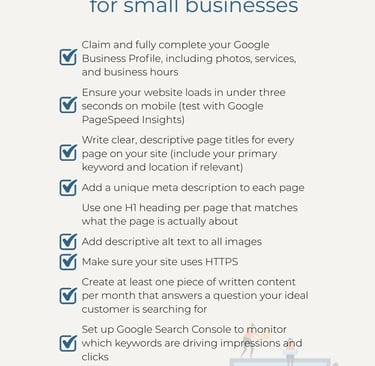
Small Business SEO Checklist for 2026
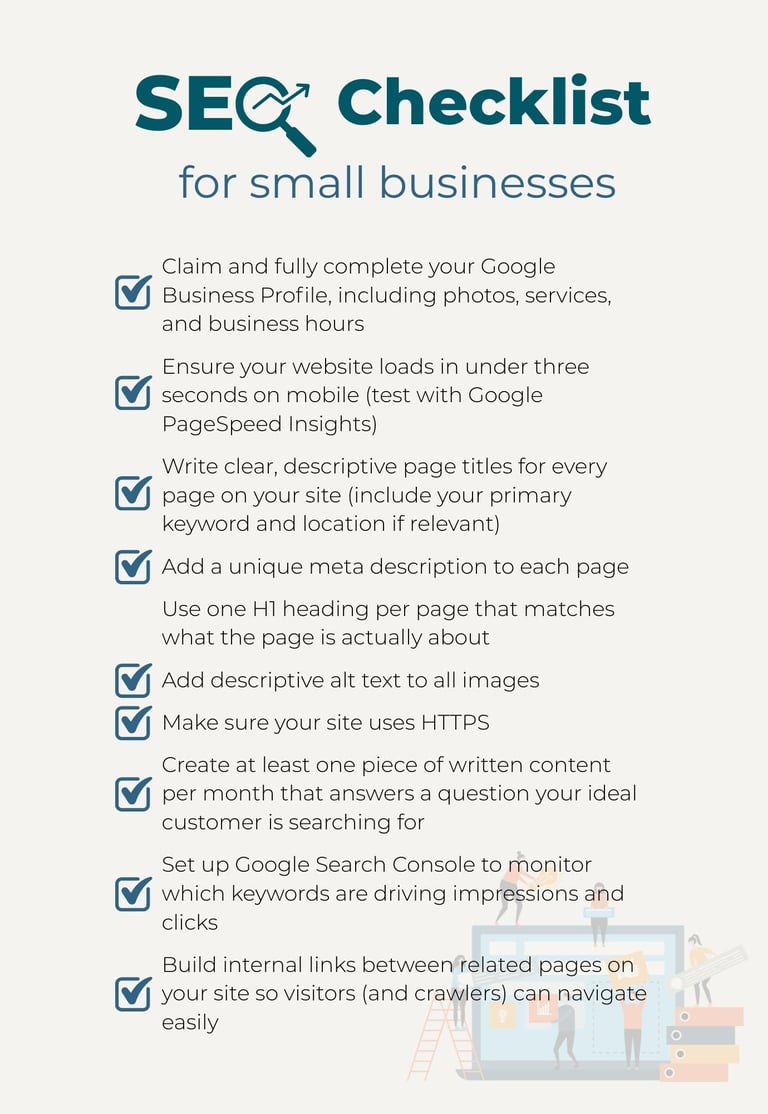
If you are just getting started, here are the foundational SEO tips for small business websites that have the highest return for the effort invested.
How AI Is Changing SEO for Small Businesses
In 2026, the search landscape looks meaningfully different from what it did just two years ago. AI-powered tools like Google AI Overviews, ChatGPT, and Perplexity are answering more search queries directly within the search interface, which means some users never click through to a website at all.
For small businesses, this raises a reasonable concern: is SEO still worth investing in if people are getting their answers from AI?
The answer is yes, for two reasons.
First, AI search tools draw from existing web content to generate their answers. They cite sources. If your website is producing well-structured, authoritative, accurate content, it becomes a candidate for inclusion in AI-generated responses. This new form of visibility, sometimes called Generative Engine Optimization (GEO), is built on the same foundations as traditional SEO: clear writing, strong structure, and genuine expertise.
Second, transactional searches, particularly local ones, have remained highly resilient. Ahrefs' data from 2025 indicates that only 7.9% of local searches trigger an AI Overview (Position Digital). When someone searches "digital marketing agency Manila" or "branding services for small business," they are not looking for an AI summary. They are looking for a business to contact. Organic and local SEO still drives that decision.
The practical shift for small businesses is this: content that is shallow, generic, or keyword-stuffed is becoming less competitive. Content that demonstrates real experience, gives specific answers, and earns trust from readers and other websites will continue to perform well, and may increasingly surface inside AI answers as well.
What SEO Can and Cannot Do
Setting realistic expectations matters. Here is a straightforward breakdown.
What SEO can do
Increase the volume of visitors who find your website through search engines
Attract visitors who are already looking for what you offer, meaning higher purchase intent than a cold ad audience
Build long-term traffic that does not disappear when a campaign ends
Position your business as credible and authoritative in your category
Compound over time: the more you publish, the more authority you build
What SEO cannot do
Produce results overnight. Patience and consistency are non-negotiable
Guarantee a specific ranking. Google's algorithm is its own and changes regularly
Substitute for a weak product or poor customer experience. More traffic amplifies what is already there
Work in isolation. SEO performs best alongside a clear brand identity, a fast website, and useful content
When to Bring in Professional Help
Many business owners begin their SEO journey by making improvements themselves, which is a sensible starting point. The checklist above is designed for exactly that phase. But there is a meaningful difference between fixing foundational issues and building a system that scales.
Here is a practical way to think about it. DIY SEO is most effective for the basics: claiming your Google Business Profile, fixing page titles, improving site speed, and publishing a regular blog. These actions establish the floor.
Professional SEO strategy comes in when you need to understand which keywords represent the highest-value opportunities for your specific business, how your competitors are winning the rankings they hold, what technical issues are quietly holding your site back, how to build a content architecture that earns authority over time, and how to measure whether any of it is actually driving business results.
At Impasto Creative Solutions, we work with business owners who have already tried to figure this out on their own and realized that the research, strategy, and execution required is more than a side task. If your website is not showing up for the searches that matter most to your business, that is the problem we are set up to solve.
Sources:
1. BrightEdge (2023). Organic search drives 53% of all website traffic. brightedge.com/resources/research-reports/channel_share
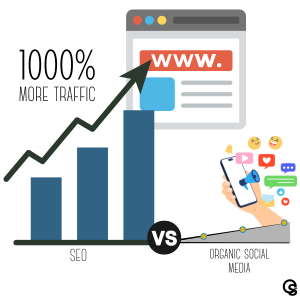
2. BrightEdge (2023). SEO drives 1,000%+ more traffic than organic social media. Reported via DemandSage. demandsage.com/website-traffic-statistics/
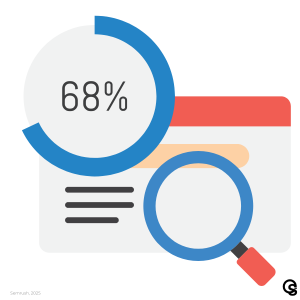
3. Semrush (2025). 68% of all online experiences begin with a search engine. semrush.com
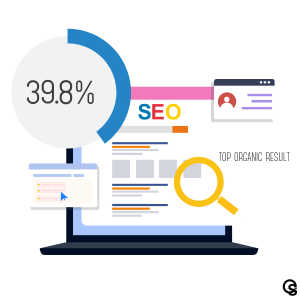
4. FirstPageSage (2025). Click-through rate data: position 1 captures 39.8% of clicks. Reported via SE Ranking. seranking.com/blog/seo-statistics/
5. Doyen Digital / Search Atlas. SEO leads close at a 14.6% rate vs. 1.7% for outbound leads. searchatlas.com/blog/seo-statistics/
6. Statista (2025). Mobile devices account for 62.73% of global website traffic. statista.com
7. Ahrefs / Position Digital (2025). Only 7.9% of local searches trigger an AI Overview. position.digital/blog/ai-seo-statistics/
8. Semrush (2025). Semrush AI Overviews Study: What 2025 SEO Data Tells Us About Google's Search Shift. Analysis of 10M+ keywords. semrush.com/blog/semrush-ai-overviews-study/
9. SE Ranking (2025). Organic traffic represents 46.98% of all traffic; 70% of searches have informational intent. seranking.com/blog/seo-statistics/
10. Google Search Central. SEO Starter Guide: The Basics. developers.google.com/search/docs/fundamentals/seo-starter-guide
11. Google PageSpeed Insights. Tool for measuring website load performance. pagespeed.web.dev
Ready to Improve Your Search Visibility?
Impasto Creative Solutions works with small and medium-sized businesses globally to build SEO strategies that attract the right traffic and convert it into real leads.
Book a free discovery call at impastocreatives.com and let's find out where your website stands.
For small businesses especially, SEO is one of the few marketing channels that compounds over time. Unlike paid advertising where traffic stops the moment your budget runs out, a well-optimized page continues attracting visitors for months or even years after it is published. That means the investment you make today keeps paying dividends long after the work is done.
There is also a credibility factor. Appearing near the top of Google signals to potential customers that your business is legitimate and authoritative in your space, before they have even visited your site.
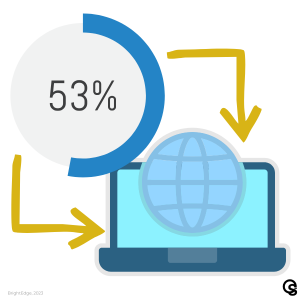
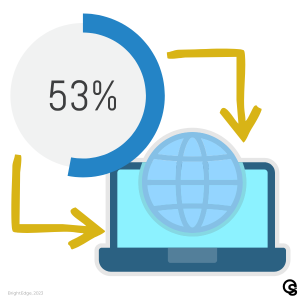
of all website traffic comes from organic search
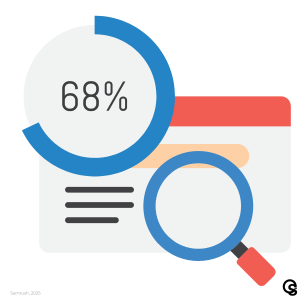
of all online experiences begin with a search engine
The top organic result captures 39.8% of all clicks for a given search
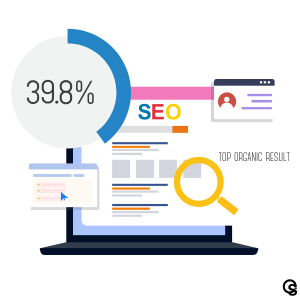
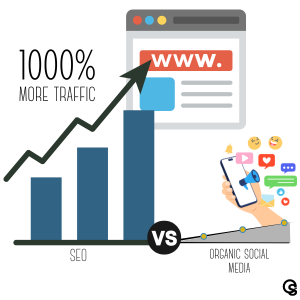
SEO drives 1,000%+ more traffic than organic social media
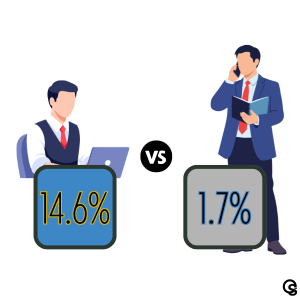
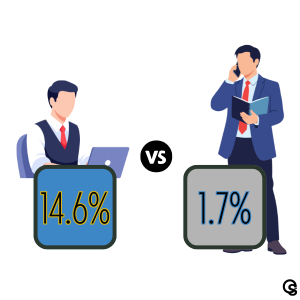
SEO leads close at a 14.6% rate, compared to 1.7% for outbound leads like cold calls
This checklist will not instantly move you to the top of Google, but completing it puts your site on solid footing. Think of it as the foundation. The strategy, content, and authority-building that goes on top of it is where growth accelerates.
IMPASTO CREATIVE SOLUTIONS
We make your brand visible, searchable, and impossible to ignore. Let’s get started today.